
A Statistical and Epidemiological Framework for Unraveling the Etiology of Cryptogenic Cirrhosis
DOI:
https://doi.org/10.59652/ahnthv08Keywords:
NASH, Cryptogenic cirrhosis, liver damage, liver function parameters, inhalation exposure, modelling, machine learning, Statistics, hepatologyAbstract
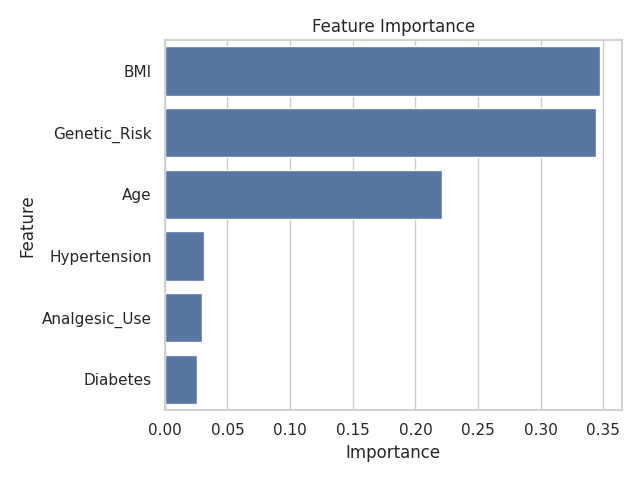
Cryptogenic cirrhosis is a diagnosis of exclusion with heterogeneous and often overlapping etiologies, making systematic investigation challenging in routine clinical practice. We propose a unified statistical and epidemiological framework that integrates classical study designs (case–control and cohort with survival analysis), evidence synthesis (meta-analysis), exploratory genetics (genome-wide association studies), and modern machine learning to examine potential contributors such as long-term analgesic exposure and metabolic comorbidities. A motivating clinical vignette is used solely to illustrate the clinical context in which such analyses may arise. All quantitative results presented in this study are derived from fully simulated datasets constructed to demonstrate the behavior and interpretability of the proposed workflow rather than to establish real-world causal effects. Within these illustrative simulations, analgesic exposure is specified to act as a risk factor, leading to elevated association measures in case–control analyses, separation of survival curves in cohort analyses, and high feature importance in predictive models, while exploratory GWAS simulations yield no genome-wide significant signals, underscoring the need for adequately powered real studies. The proposed workflow is transparent, reproducible, and deployable in prospective registries, with the primary goal of generating testable etiologic hypotheses rather than confirming definitive clinical associations.
Downloads
References
1. Mercado-Irizarry, A., & Torres, E. A. (2016). Cryptogenic cirrhosis: Current knowledge and future directions. Clinical Liver Disease, 7(4), 69–72.
2. Baral, A. (2024). Endoplasmic reticulum stress signaling in the regulation of hepatic pathological responses. Stresses, 4(3), 481–504.
3. Kotak, K. P. (2014). Investigation of epidemiology and etiology of liver diseases and characterization of its association with various factors (PhD thesis). Institute of Pharmacy, Nirma University, Ahmedabad.
4. Gan, C., Yuan, Y., Shen, H., Gao, J., Kong, X., Che, Z., Guo, Y., Wang, H., Dong, E., & Xiao, J. (2025). Liver diseases: Epide-miology, causes, trends and predictions. Signal Transduction and Targeted Therapy, 10(1), 33.
5. Alizade, E., & Alizade, A. (2024). Patient with cryptogenic cirrhosis. Annals of Innovation in Medicine, 2(3).
6. Caldwell, S., Oelsner, D., Iezzoni, J., Hespenheide, E., Battle, E., & Driscoll, C. (1999). Cryptogenic cirrhosis: Clinical charac-terization and risk factors for underlying disease. Hepatology, 29(3), 664–669.
7. Maddrey, W. C., & Feldman, M. (2013). Atlas of the liver. Springer Science & Business Media.
8. Wicaksono, S., Mardin, A., & Utami, S. (2022). The effect of paracetamol and codeine analgesic combination on serum alanine aminotransferase and aspartate aminotransferase levels in male Wistar rats. Open Access Macedonian Journal of Medical Sciences, 10(B), 2267–2272.
9. Shi, C., Hao, B., Yang, Y., Ishfaq, M., Zhang, Y., Chang, Y., & Liu, F. (2019). JNK signaling pathway mediates acetamino-phen-induced hepatotoxicity accompanied by changes of glutathione S-transferase A1 content and expression. Frontiers in Pharmacology, 10, 1092.
10. Huang, Y., Chen, P., Lee, C., Yang, S., Lin, J., Lee, H., & Wu, Y. (2016). Protection against acetaminophen-induced acute liver failure by omentum adipose tissue-derived stem cells through the mediation of Nrf2 and cytochrome P450 expression. Journal of Biomedical Science, 23(1), 1–12.
11. Kalinec, G., Thein, P., Parsa, A., Yorgason, J., Luxford, W., Urrutia, R., & Kalinec, F. (2014). Acetaminophen and NAPQI are toxic to auditory cells via oxidative and endoplasmic reticulum stress-dependent pathways. Hearing Research, 313, 26–37.
12. Bruells, C., Duschner, P., Marx, G., Gayan-Ramirez, G., Frank, N., Breuer, T., & Mossanen, J. (2021). Acute liver injury following acetaminophen administration does not activate atrophic pathways in the mouse diaphragm. Scientific Reports, 11(1), 1–9.
13. Ben-Shachar, R., Chen, Y., Luo, S., Hartman, C., Reed, M., & Nijhout, H. F. (2012). The biochemistry of acetaminophen hepa-totoxicity and rescue: A mathematical model. Theoretical Biology and Medical Modelling, 9(1), 1–15.
14. Setiawan, V., Stram, D., Porcel, J., Lu, S., Marchand, L., & Noureddin, M. (2016). Prevalence of chronic liver disease and cirrhosis by underlying cause in understudied ethnic groups: The Multiethnic Cohort. Hepatology, 64(6), 1969–1977.
15. Iqbal, U., Perumpail, R. B., John, N., Sallam, S., Shah, N., Kwong, W., & Ahmed, A. (2018). Judicious use of lipid lowering agents in the management of NAFLD. Diseases, 6(4), 87.
16. Bhosle, D. (2023). Haematological profile in chronic liver disease patients in geriatric population: An observational study. Indian Journal of Forensic Medicine & Toxicology, 17(2), 21–24.
17. Wu, Z., Han, H., Xu, M., Shen, Y., Gao, C., Yuan, H., & Tian, J. (2020). Analgesic and anti-inflammatory activities of the capil-liposide derived from Lysimachia capillipes Hemsley, a traditional Chinese medicinal herb. Archives of Biological Sciences, 72(4), 515–523.
18. Tangudu, N., Buth, N., Strnad, P., Cirstea, I., & Spasić, M. (2019). Deregulation of hepatic MEK1/2–ERK1/2 signaling module in iron overload conditions. Pharmaceuticals, 12(2), 70.
19. Baruteau, J., Waddington, S., Alexander, I., & Gissen, P. (2017). Gene therapy for monogenic liver diseases: Clinical successes, current challenges and future prospects. Journal of Inherited Metabolic Disease, 40(4), 497–517.
20. Maheshwari, A., & Thuluvath, P. J. (2006). Cryptogenic cirrhosis and NAFLD: Are they related? The American Journal of Gastro-enterology, 101(3), 664–668.
21. Mohammed, O. M., & Mahadeva, S. (2015). Clinical outcomes of cryptogenic compared with non-cryptogenic cirrhosis: A retrospective cohort study. Journal of Gastroenterology and Hepatology, 30(9), 1423–1428.
22. Leite, A., Mattos, A., Coral, G., & Evaldt, S. (2012). Risk factors for nonalcoholic steatohepatitis in cryptogenic cirrhosis. Ar-quivos de Gastroenterologia, 49(4), 245–249.
23. Lee, W. M., & Sokol, R. J. (2007). Mitochondrial hepatopathies: Advances in genetics and pathogenesis. Hepatology, 45(6), 1555–1565.
24. Chen, H.-Y., Wu, S.-Y., Hsu, S.-Y., Liou, B.-C., Chen, H.-H., & Chang, M.-F. (2018). Jaundice revisited: Recent advances in the diagnosis and treatment of inherited cholestatic liver diseases. Journal of Biomedical Science, 25(1), 1–10.
25. Moayedi, J., Moini, M., Geramizadeh, B., Malekhosseini, S. A., & Yaghobi, R. (2019). Seropositive form of occult hepatitis B virus infection in Iranian patients with cryptogenic liver cirrhosis. Hepatitis Monthly. Advance online publication.
26. Ahammed, S. (2014). Cryptogenic cirrhosis and NASH: Entities in evolution and involution. Tropical Gastroenterology, 35(2), 65–70.
27. Tan, A., Florman, S., & Schiano, T. (2017). Genetic, hematological, and immunological disorders transmissible with liver transplantation. Liver Transplantation, 23(5), 663–678.
28. Hosack, T., Damry, D., & Biswas, S. (2023). Drug-induced liver injury: A comprehensive review. Therapeutic Advances in Gastro-enterology, 16, 17562848231163410.
29. Kuna, L., Bozic, I., Kizivat, T., Bojanic, K., Mrso, M., Kralj, E., Smolic, R., Wu, G. Y., & Smolic, M. (2018). Models of drug induced liver injury (DILI) – Current issues and future perspectives. Current Drug Metabolism, 19(10), 830–838.
Downloads
Published
Issue
Section
License
Copyright (c) 2026 Annals of Innovation in Medicine

This work is licensed under a Creative Commons Attribution 4.0 International License.




 EIKI LTD